Used AI in Your Book? What to Tell Amazon KDP
Amazon KDP AI disclosure explained: what counts as AI-assisted vs AI-generated, plus book covers, copyright, and privacy settings to check before you upload.
You could write every word of your book yourself and still have to tell Amazon that you used AI. You could also run AI over every page and not have to tell Amazon anything. The line isn’t where most writers think it is.
Here is the short answer on Amazon KDP AI disclosure. Kindle Direct Publishing (KDP), Amazon’s self-publishing platform, requires you to disclose AI-generated text, images and translations, including your cover. You don’t have to disclose AI-assisted content, where you created the work and used AI to brainstorm, edit or error-check it.
Between CJ and me, we have published more than 70 books, most of them through KDP, and this question comes up on our coaching calls all the time. We are not lawyers, so we will show you Amazon’s own words. Then we will walk through seven examples, cover design, copyright and one privacy setting to check today.
Key Takeaways
- Disclose AI-generated content. KDP requires it for AI-made text, images, covers and translations, even after heavy edits.
- AI-assisted content needs no disclosure. That covers brainstorming, editing, refining and error-checking work you created.
- Ask anyone you hire, in writing, whether they use AI on your cover, illustrations or manuscript.
- AI-generated content can’t be registered for U.S. copyright. Your own words can, so register your books.
- Turn off model training in ChatGPT and Claude before you paste in your manuscript.
What Does Amazon KDP AI Disclosure Require?
KDP requires you to tell Amazon about AI-generated content whenever you publish a new book or republish an edited one. The AI section of KDP’s content guidelines reads: “We require you to inform us of AI-generated content (text, images, or translations) when you publish a new book or make edits to and republish an existing book through KDP.”
AI-generated images include your cover and interior artwork. AI-assisted content is different, and Amazon says so plainly: “You are not required to disclose AI-assisted content.” The guidelines don’t say whether readers ever see your answer or how Amazon uses it.
One detail surprises almost everyone. Content counts as AI-generated “even if you applied substantial edits afterwards.” A passage could be 80% your own revisions, but if it started inside an AI tool, KDP still calls it generated.
Go to the source. I have self-published since 2008 and watched writers get worked up over rumors. Check KDP’s current guidelines before every upload, because they may change.
What Is the Difference Between AI-Assisted and AI-Generated?
The difference is who created the original words and images. Amazon doesn’t care which tool you opened. It cares where the content began.
| AI-assisted | AI-generated | |
|---|---|---|
| Who created the content | You | An AI tool |
| What AI did | Edited, refined, error-checked or brainstormed | Wrote text, made images or translated |
| Disclose to KDP? | No | Yes |
| Do your later edits change it? | Not applicable | No, it stays generated |
KDP defines AI-assisted this way: “If you created the content yourself, and used AI-based tools to edit, refine, error-check, or otherwise improve that content (whether text or images), then it is considered ‘AI-assisted’ and not ‘AI-generated.'”
Brainstorming counts as assisted too, as long as you created the final text or images yourself. Either way, KDP holds you responsible for making sure everything in your book respects intellectual property rights.
Seven Examples: Is It AI-Assisted or AI-Generated?
Here are seven situations Kingdom Writers bring to us, with how each lands under KDP’s definitions.
| # | Situation | Verdict |
|---|---|---|
| 1 | You wrote the words, and AI flagged a repeated word while you self-edited | Assisted |
| 2 | You brainstormed titles or an outline with AI, then wrote every word | Assisted |
| 3 | AI drafted passages, and you edited them heavily | Generated |
| 4 | AI made your book cover | Generated |
| 5 | AI made the illustrations for your children’s book | Generated |
| 6 | You made an AI mock-up for inspiration, and a designer created the final art | Assisted, if the designer didn’t use AI |
| 7 | AI translated your book into another language | Generated, for that edition |
Number three catches people off guard. Heavy editing doesn’t move AI-drafted text into the assisted column, because the words started in the tool, not in your mind.
Number five matters if you are planning a picture book, and our guide to self-publishing a children’s book covers working with an illustrator. Number seven applies only to the translated edition.
What If Your Cover Designer or Editor Uses AI?
Ask every person you hire, in writing, whether and how they use AI. An editor, cover designer, illustrator or ghostwriter who quietly uses AI can turn your book into AI-generated content without your knowledge.
Some designers and illustrators now use these tools to shortcut their process and don’t mention it. If they generated your cover art, you are still the one answering KDP’s question.
An editor who uses AI to check words you already wrote keeps your book in assisted territory. A ghostwriter or illustrator who generates content moves it into generated territory. You need to know which one you are hiring. What a book editor does is a good primer before you start asking.
Get it in writing before the work starts. Undisclosed AI could cause trouble with your KDP account or delay a launch you have planned for months. A short written answer now costs far less than a surprise later.
Why Do We Still Hire a Cover Designer and Illustrator?
CJ and I still recommend hiring a human cover designer and illustrator, even though ChatGPT now makes beautiful images. AI-made art has to be disclosed, and nobody knows what that label might mean down the road.
CJ points out that Amazon already treats some content differently. Under KDP’s eBook royalty rules, “Works in the public domain or consisting primarily of public domain content are only eligible for the 35% royalty option.” Original, in-copyright work can earn up to 70%. That is half the royalty.
We are not saying Amazon will ever treat AI content that way. We have no idea. But we would rather not find out with our own books.
So here is our approach. Use AI to brainstorm what you want, hand the idea to a human designer, and ask in writing whether they use AI. If AI did create something in your book, check the disclosure box. Never hide it.
Can You Copyright a Book Written With AI?
In the United States, you can’t register copyright for AI-generated content. The U.S. Copyright Office requires a human author. In Thaler v. Perlmutter, the courts upheld that rule, and on March 2, 2026, the U.S. Supreme Court declined to hear the case.
Copyright is different from commercial rights. OpenAI’s Terms of Use say you “own the Output” from ChatGPT, so you can sell what it generates. The same terms warn that “other users may receive similar output.” Your AI-generated chapter may not be unique.
Here is what that means for a Kingdom Writer. The words you write yourself can be protected. AI-generated words can’t, so someone else could copy them. That is one more reason to keep the writing yours. Other countries set their own rules, so research yours.
Should You Register the Copyright for Your Book?
Yes. I now recommend registering your books with the U.S. Copyright Office. My opinion has changed on this. You own the copyright to your own words when you write them, but registration matters more than it used to.
Here is why. In the $1.5 billion Bartz v. Anthropic settlement over pirated books used to train AI, self-published authors could receive about $3,000 per title. According to the Authors Guild, books that weren’t registered with the Copyright Office in time were left out.
Registration takes a few extra steps, and it isn’t expensive. It gives your words legal standing if they are ever copied or used without permission.
We are not attorneys, and this isn’t legal advice. For anything contract-level, talk with an intellectual property attorney, and check current guidance in your country.
Does Putting Your Book Into ChatGPT or Claude Train the AI?
It can, unless you turn off the training setting. Members often ask whether pasting their words into AI adds them to a huge database other people could draw from. There is always some risk when you use AI, and each of you has to decide whether to take it. You can still add a safeguard in under a minute.
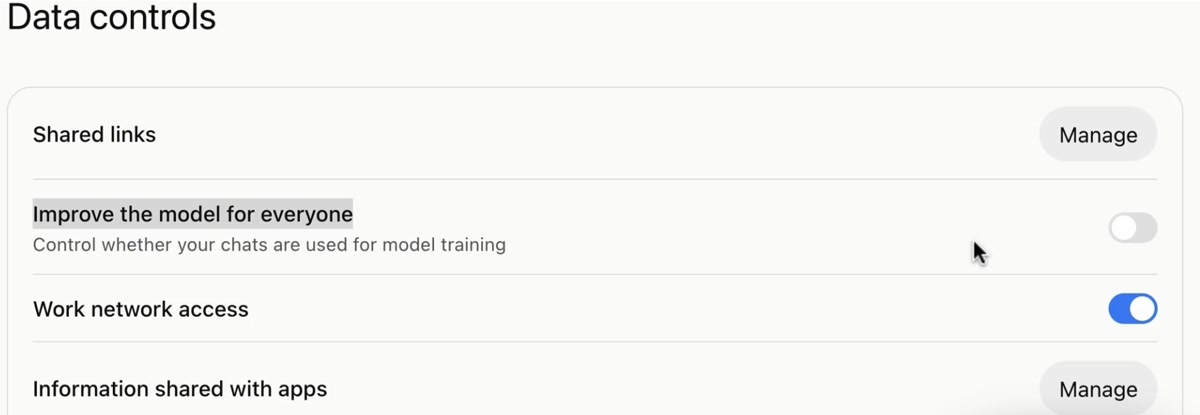
In ChatGPT, open Settings, select Data controls, and turn off “Improve the model for everyone,” as OpenAI’s help center explains.
In Claude, open Settings, select Privacy, and toggle off “Help improve our AI models,” as Anthropic’s privacy center explains.
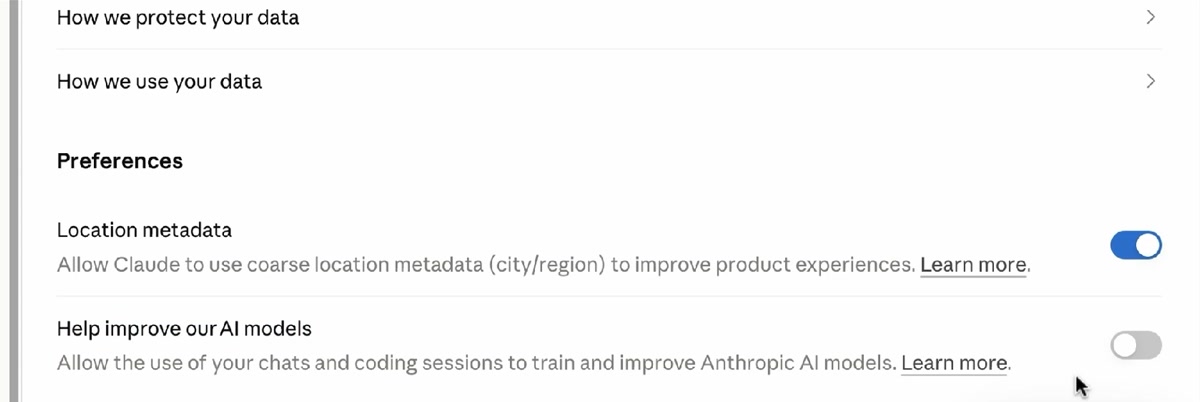
Each setting applies to new chats from the moment you change it, so turn it off before you paste in any part of your manuscript. Using a different tool? Look in its privacy settings for a similar switch.
Why Should You Always Check Yes When AI Created Content?
If any part of your book is AI-generated, check yes when KDP asks. Honesty is a Kingdom value. Proverbs 12:22 says the Lord “delights in those who tell the truth.”
Hiding AI use puts your KDP account at risk, and it costs something more important: your integrity as a writer who represents Christ.
If you would rather not disclose, change the content, not the answer. Have a designer redo your cover, commission new illustrations, or rewrite the AI-drafted passages yourself. Then your honest answer becomes no.
When you aren’t sure, ask. You can contact KDP directly with questions, and our Amazon KDP publishing guide walks through the rest of the upload process. The simplest way to stay out of the gray areas is to write your own words.
Want Help Writing Your Own Words?
The surest way to keep your book on the AI-assisted side of the line is to write it yourself, and that takes time set aside. Our free 15-minute Writing Restart call meets on Zoom the first Wednesday of every month, and Kingdom Writers show up and write together on the call. Bring your manuscript and your next sentence.
Inside Christian Book Academy, our membership community for Kingdom Writers, you will find 17 AI tools built with guardrails, and we keep adding more. They help you brainstorm and get feedback without rewriting your words, and we pay for the usage. New members also get our AI for Christian Writers guide.
Use coupon code AIWRITERS to join Christian Book Academy for $1 your first month. After that, membership is $49 a month.
Final Thoughts
AI is changing fast, sometimes daily, so treat this as accurate at the time of writing. The principle underneath won’t change: tell the truth about how your book was made.
If you haven’t read part one of this series, start with Should Christian Writers Use AI to Write a Book? It covers how CJ and I decided where AI belongs, and why God holds the plan while you hold the pen.
Next week, in part three, I’ll edit a piece of my own writing with AI and show you what I keep and what I throw out.
The God who called you to write delights in truthful lips. Write your words, disclose honestly, and trust Him with the rest. Your book was never meant to be anyone’s but yours and His.
Frequently Asked Questions About Amazon KDP AI Disclosure
This post is part of our AI for Kingdom Writers series: Should Christian Writers Use AI to Write a Book? | Used AI in Your Book? What to Tell Amazon KDP | AI Book Editing for Christian Writers: Keep Your Voice.
Last Updated: November 10, 2026
